How to season a Blackstone grill is one of the first things every new griddle owner should learn.
Without proper seasoning, food is more likely to stick, the cooking surface can develop rust, and the griddle won’t perform the way it’s designed to.
The good news is that seasoning isn’t complicated. With the right oil, enough heat, and a few repeated coats, you can build the protective surface that makes cooking and cleanup much easier.
Before you start your first cook, here’s exactly how to season a Blackstone grill the right way.
1. Benefits of Seasoning a Blackstone Grill
Before getting into the process itself, it helps to understand why seasoning matters and what it actually does for the cooking surface.
Seasoning means baking thin layers of oil onto the steel until they form a hard, dark coating.
That coating earns its keep: it creates a non-stick surface so eggs and pancakes slide right off, protects the bare metal from rust, helps create a smoother cooking surface, and improves food release.
In short, knowing how to season a Blackstone flat top grill is the foundation for every good meal that follows.
>>> Read more: How to Clean a Blackstone Grill for a Long-Lasting Cooking Surface
2. What You’ll Need Before You Start
A successful seasoning session starts with a few basic supplies and a properly prepared griddle surface.
Gather the Right Tools and Supplies
You don’t need anything fancy: a high-smoke-point oil (avocado, canola, grapeseed, flaxseed, or other high-smoke-point oils), paper towels, tongs, heat-resistant gloves, and a metal scraper.
Keep soapy water handy for the first clean, and work somewhere with good airflow, as seasoning gets smoky.
Clean the Griddle Surface
How you clean depends on the griddle’s history:
- New Blackstone: A brand-new top just needs one wash with warm, soapy water to remove the factory coating, then a thorough dry.
- Previously used Blackstone: Scrape off food bits and wipe it clean. Skip the soap on an already-seasoned top, since it strips the coating.
- Removing factory coating or residue: A soap-and-water wash is commonly recommended before the first seasoning. After that, most routine cleaning can be done with water, scraping, and light oiling.
3. How to Season a Blackstone Grill for the First Time (Step-by-Step)
Once the griddle is clean and your supplies are ready, you can begin building the protective seasoning layer, or in other words, how to season a Blackstone grill.
Step 1: Clean the Griddle Surface
Wash a new griddle with soapy water, rinse, and dry it completely. Leftover moisture causes rust, so it must be bone dry before heating.
Step 2: Preheat the Griddle
Turn all burners to high and heat for 10 to 15 minutes. The steel will change color, turning brown or bluish in places; that discoloration is normal.
Step 3: Apply a Thin Layer of Oil
Pour a tablespoon or two of oil onto the hot surface and spread it into a thin, even layer with paper towels held in your tongs. Thin is key; too much oil leaves a sticky, gummy finish.
Step 4: Let the Oil Reach Its Smoke Point
Leave the heat on and let the oil smoke; this is the oil bonding to the steel. Let it smoke until it stops, usually a few minutes, and don’t add more oil while it’s still smoking.
Step 5: Repeat the Process Multiple Times
Once the smoking settles, add another thin coat and smoke it again. Repeat four to six times; each round darkens the steel and builds that tough, non-stick layer.
Step 6: Know When the Griddle Is Properly Seasoned
You’re done when most of the surface has darkened significantly, even if some areas remain lighter than others. The seasoning will continue developing as you cook.
>>> Read more: How to Clean Grill Grates Easily for Grease, Burnt Food, and Rust
4. Common Problems and How to Interpret Them
Not every griddle looks perfect after the first seasoning session. Here are some common situations and what they usually mean, besides how to season a Blackstone grill:
- Some areas turn darker than others: Normal, especially near the hottest burners; it evens out as you cook.
- Brown spots or lighter areas remain: They just need more coats, keep layering oil, and heating until the color evens out.
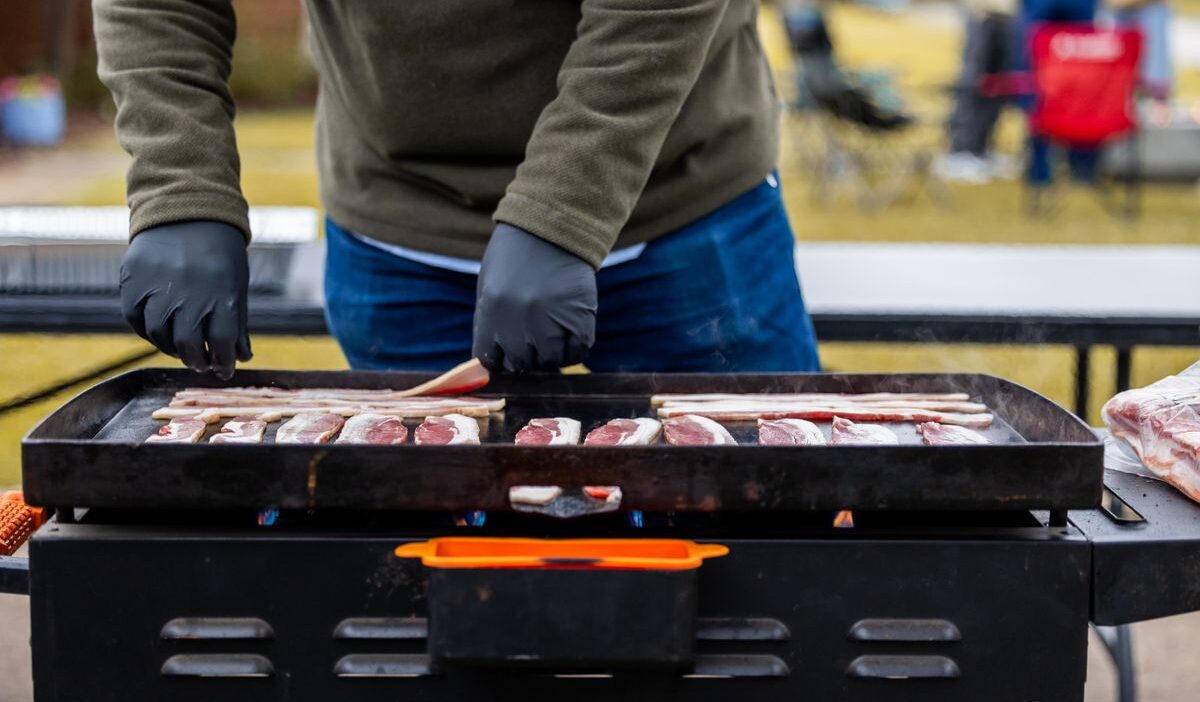
- Food may still stick after seasoning: Early seasoning is thin. Cooking fatty foods like bacon builds it up, and the sticking fades.
- Rust or surface issues before seasoning: Scrub rust off with oil and a scouring pad, wipe clean, then season as usual.
5. Tips for Maintaining Your Seasoned Blackstone Grill
Seasoning doesn’t stop after the first setup. A few simple habits help keep the cooking surface in excellent condition over time.
- Routine care after cooking: While the griddle is still warm, scrape off food, wipe it down, and rub on a thin coat of oil.
- Protecting the griddle during storage: Let it cool fully, then cover it. A lid or cover keeps out moisture and rust, especially if you store it outside.
- Signs it’s time to re-season: Dull gray patches, sticky food, or small rust spots all mean the coating needs a refresh.
- Re-season the surface: How to re season a Blackstone grill surface is easy to handle. Just repeat the oil-and-smoke steps on the worn spots until they’re dark and smooth. Keeping up with the procedure of how to clean and season a Blackstone grill after each cook helps keep the surface protected and performing well.
6. FAQs
Do you put oil down every time you cook on Blackstone?
Yes, a little. A thin layer of oil before cooking helps food release, but you don’t need the full smoking process every time.
What not to do on a Blackstone griddle?
Avoid soap on a seasoned surface, never pour cold water on a screaming-hot top since it can warp, and go easy on acidic foods like tomato sauce early on.
Can I use olive oil to season my Blackstone?
You can, but olive oil has a lower smoke point. High smoke-point oils like avocado, canola, or flaxseed usually give a more durable finish.
How to prevent rust on a Blackstone?
Dry the surface, keep a thin coat of oil on it, and cover it for storage. Moisture is the enemy, so oiling after every cook goes a long way.
Do you have to clean your Blackstone after every cook?
Yes, but it’s quick, scrape, wipe, and re-oil while it’s warm. This light routine protects your seasoning for next time.
7. Conclusion
Mastering how to season a Blackstone grill is less about a one-time setup and more about creating a foundation for every meal that follows. Each layer of seasoning strengthens the surface, improves cooking performance, and helps protect the griddle over time.
Once you understand the process, maintaining that smooth, dark cooking surface becomes part of the routine rather than a chore. With a little consistency, the griddle continues to improve with every cook.