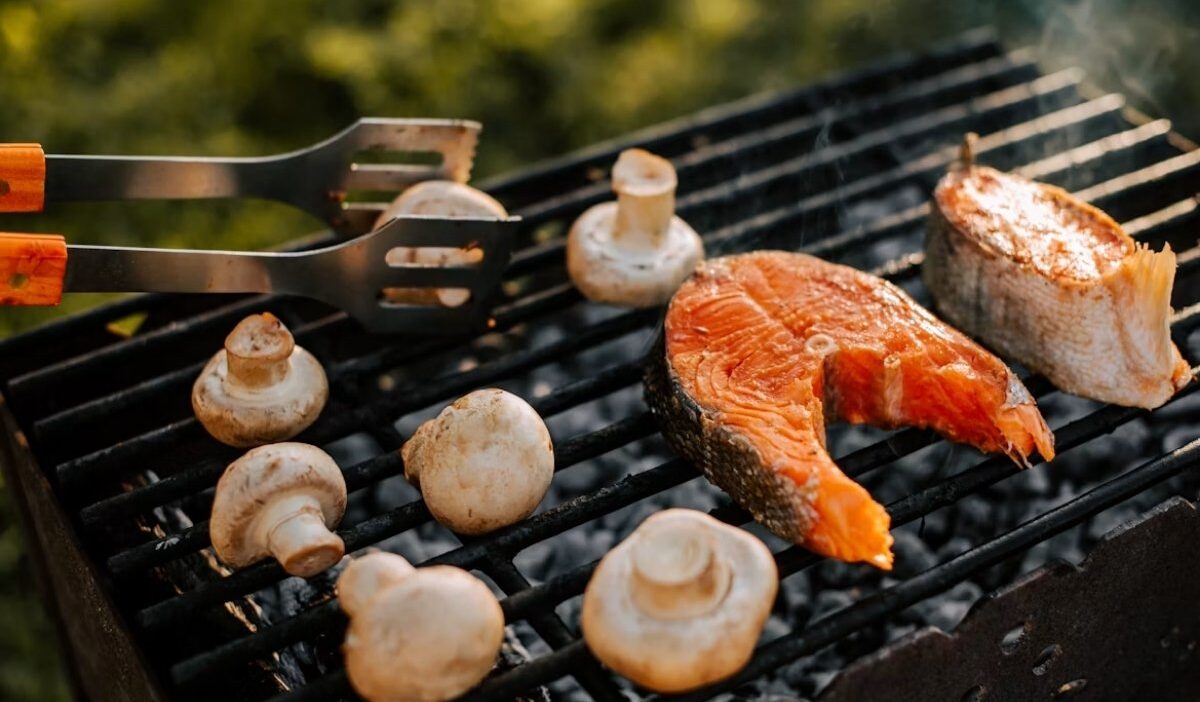
Salmon develops a rich flavor and tender texture on the grill. To learn how to cook salmon on the grill, focus on the right cut, temperature, and cooking method.
This guide explains each step clearly, along with cooking times, doneness signs, and practical solutions for common grilling issues.
1. What to Know Before Grilling Salmon
A little preparation before the grill heats up can make the cooking process much smoother when learning how to cook salmon on the grill.
1.1 Best Salmon Cuts: Fillet, Steak, or Whole Salmon
Salmon comes in several cuts, and each one cooks differently.
- Fillets are the most common option for home grilling. They cook evenly and are easy to handle.
- Salmon steaks are cross-cut portions with a center bone. They hold their shape well over direct heat.
- Whole salmon works best for larger gatherings and typically requires indirect heat and a longer cooking time than fillets or steaks.
For anyone learning how to cook salmon on the grill, fillets are usually the easiest choice.
1.2 Skin-On vs Skin-Off: What Works Better on Grill
Skin-on salmon works especially well on a grill because the skin creates a protective layer between the fish and the grates.
Benefits of skin-on salmon include:
- Better structure during cooking
- Easier release from grill grates
- More moisture retention
Skin-off salmon can still work well, although foil or a grill basket often helps support the fish during cooking.
1.3 Grill Setup: Gas vs Charcoal Basics
Both grill types can produce excellent salmon. Gas grills provide easier heat adjustment, while charcoal grills add a smoky flavor for those exploring how to cook salmon on the grill.
2. Foil vs Direct Grill vs No-Flip: Which One Should You Use
Different grilling methods suit different situations, depending on your experience level and the type of salmon.
2.1 Foil Method: Best for Beginners & No-Stick Cooking
Many people choose how to cook salmon on the grill in foil because foil creates a simple cooking surface and helps retain moisture.
This method works well when:
- Cooking delicate fillets
- Adding vegetables or sauces
- Serving a family meal with minimal cleanup
2.2 Direct Heat Skin-Side Down for Classic Grill Style
Direct grilling creates the traditional grilled salmon appearance and flavor.
This method is ideal when you want:
- Light grill marks
- Crispy skin
- A slightly smoky finish
This is a popular approach for how to cook salmon on the grill with a classic barbecue texture.
2.3 No-Flip for Simple Cooking Control
The no-flip approach keeps the salmon skin-side down for the entire cooking process.
Benefits include:
- The fish stays intact
- Less handling is required
- Even cooking with the lid closed
Many home cooks prefer this option when first learning how to cook salmon on the grill.
3. How to Cook Salmon on the Grill Step-by-Step
The following methods provide straightforward instructions that you can use at home for how to cook salmon on the grill.
Direct-Grill Method: This approach delivers classic grilled salmon with crisp skin and a flaky interior.
- Step 1: Preheat the grill to 375°F–450°F (190°C–232°C).
- Step 2: Pat the salmon dry and brush lightly with oil.
- Step 3: Season as desired.
- Step 4: Place the salmon skin-side down on clean grill grates.
- Step 5: Close the lid and cook for 6–8 minutes.
- Step 6: Continue cooking skin-side down or flip briefly for additional color if desired.
- Step 7: Remove when done and rest for 3–5 minutes.
Grilling Salmon Steaks: People often ask how to cook salmon steaks on the grill because steaks require a slightly different approach.
- Step 1: Preheat the grill to medium-high heat, approximately 400°F–450°F (204°C–232°C).
- Step 2: Brush the steaks with oil and season both sides.
- Step 3: Place the steaks directly over the heat source.
- Step 4: Cook for approximately 4–5 minutes per side for steaks around 1 inch thick.
- Step 5: Check the center with an instant-read thermometer.
- Step 6: Allow a short resting period before serving.
>>> Read more: How Long to Grill Shrimp: Tips to Make Shrimp Flavorful
4. Grilling Time, Doneness & Common Mistakes Fixed
Cooking time and temperature work together, so it helps to understand both before serving the fish.
4.1 How Long to Cook Salmon on the Grill
One of the most common questions is how long to cook salmon on the grill, or how long does it take to cook salmon on the grill. The answer largely depends on the thickness of the fish and the temperature of your grill.
| Salmon Thickness | Approximate Grill Time at 400°F–450°F |
| 1 inch | 8–10 minutes |
| 1.5 inches | 10–12 minutes |
| 2 inches | 12–15 minutes |
These timing estimates support consistent results when practicing how to cook salmon on the grill.
4.2 How to Tell When Salmon Is Done
Several signs indicate that salmon is ready to serve.
Look for:
- Flesh that changes from translucent to mostly opaque
- Gentle flaking when pressed with a fork
- Moist interior texture
For temperature reference, it helps to distinguish between culinary preference and food safety guidance:
| Internal Temperature | Result |
| 120°F–125°F (49°C–52°C) | Soft, medium-rare center |
| 125°F–130°F (52°C–54°C) | Moist and flaky texture preferred by many chefs |
| 130°F–135°F (54°C–57°C) | Medium doneness |
| 145°F (63°C) | The FSIS-recommended minimum internal temperature for fish |
The Food Safety and Inspection Service (FSIS) recommends cooking fish to 145°F (63°C) measured at the thickest part.
However, many chefs and grilling experts remove salmon from the grill around 125°F–130°F because carryover heat continues to raise the temperature slightly during resting.
An instant-read thermometer provides the most reliable measurement.
4.3 Common Grilling Problems & How to Fix Them
These adjustments help refine how to cook salmon on the grill with more consistent texture and appearance.
| Problem | How to Fix |
| Salmon sticks to the grill | Preheat the grill fully, oil the fish lightly, and allow the skin enough time to release naturally before moving it. |
| Salmon feels dry | Remove the fish closer to 125°F–130°F if you prefer a medium texture, monitor thickness instead of relying only on time, and let the fish rest briefly before serving. |
| Salmon breaks apart | Choose skin-on fillets, use a wide spatula for support, and consider foil for delicate portions. |
| Uneven cooking | Arrange the fish over a consistent heat zone and keep the lid closed during most of the cooking process. |
>>> Read more: What Time Do They Start Selling Beer in Texas? Your 2026 Guide
5. FAQs
These quick answers cover several common salmon grilling questions.
1. Do you grill salmon in foil or not?
Either option works. Choose foil for delicate fillets or direct grilling for grill marks and crisp skin.
2. How to cook salmon steaks on the grill?
Grill salmon steaks over medium-high heat and check the center with a thermometer because cooking time varies by thickness.
3. What temperature is best for grilled salmon?
A grill temperature of 400°F–450°F (204°C–232°C) works well for most salmon recipes because it balances surface browning and even cooking.
6. Conclusion
Mastering how to cook salmon on the grill starts with the right cut, cooking method, and grill temperature. Keep the grill at 375°F to 450°F and check doneness regularly for consistent results.
Whether you use foil, direct heat, or a no-flip method, each approach can produce flaky and flavorful salmon.
For more practical BBQ tips and outdoor cooking guides, visit HanksTexasGrill.