How long to grill shrimp skewers depends on shrimp size, grill temperature, and whether the shrimp are peeled, shell-on, or paired with other ingredients. Because shrimp cook so quickly, even a small timing difference can affect whether they stay juicy or turn firm and rubbery.
Fortunately, getting the timing right is easier once you know what to watch for. Start with a properly prepared grill and evenly sized shrimp, then use the cooking time as a guide rather than relying on the clock alone. Here is how to prepare, grill, and check your shrimp so you know exactly when to take them off the heat.
1. Prepare the Shrimp and Grill First
Before worrying about minutes on the grill, take a moment to prepare the shrimp and cooking surface. These small steps help the shrimp cook at a similar rate, making the timing in the next section much more reliable.
- Thaw and dry the shrimp: Thaw frozen seafood safely before cooking, then pat the shrimp dry with a paper towel before grilling.
- Choose evenly sized shrimp: Select shrimp with similar sizes for the skewers.
- Thread the shrimp evenly: Place similarly sized shrimp close together on each skewer without overcrowding them. Keeping them secure makes the skewers easier to flip and helps the shrimp cook at a similar rate.
- Preheat the grill: Heat the grill to medium-high before placing the shrimp skewers on the grate.
- Prepare wooden or metal skewers: Soak wooden skewers before grilling, while metal skewers can be used directly.
With the shrimp prepared and the grill hot, you can now use a general time range to estimate when they will be ready.
2. How Long to Grill Shrimp Skewers
So, how long to grill shrimp on skewers? As a practical starting point, shrimp skewers commonly take about 5 to 6 minutes total around 375°F to 400°F, turning once halfway through.
Shrimp can cook faster over higher direct heat, however, so begin checking them early rather than waiting for the timer alone.
| Grilling Step | Time | What to Do |
| First side | 2 to 3 minutes | Place the shrimp skewers on the grill and cook until the shrimp begin to change color. |
| Second side | 2 to 3 minutes | Flip the skewers and continue cooking until the shrimp become fully opaque. |
That timing works well as a starting point, but it is not a rule for every skewer. If your shrimp are especially large, still have their shells, or your grill runs hotter or cooler than expected, the cooking time can shift.
3. Factors That Affect Grilling Time
The 5 to 6 minute guideline works for many shrimp skewers, but knowing what can change that timing makes it much easier to avoid undercooking or overcooking them.
Shrimp Size
Start with the shrimp themselves. Size directly affects how long to grill shrimp skewers because thicker pieces generally need more time for heat to reach the center.
Shrimp are commonly labeled by count per pound, with fewer shrimp per pound indicating larger pieces.
| Shrimp Size | Approximate Count Per Pound | Grilling Time Adjustment |
| Medium shrimp | 41–50 pieces per pound | Usually fits the 5–6 minute guideline. |
| Large shrimp | 31–40 pieces per pound | May need slightly more time than medium shrimp. |
| Jumbo shrimp | 21–30 pieces per pound | Usually needs more time than smaller shrimp because of the thicker size. |
For that reason, try not to mix very different shrimp sizes on the same skewer. Smaller pieces may become overcooked while you are waiting for larger ones to finish.
Grill Temperature
Size is only one part of how long to grill shrimp skewers. The amount of heat reaching the shrimp matters just as much.
For how long to grill shrimp skewers on gas grill, about 5 to 6 minutes is a useful starting point when the grill is preheated to roughly 375°F to 425°F. Because grill thermometers and heat zones vary, check the shrimp themselves rather than relying on temperature and time alone.
If the grill has not fully preheated, the shrimp may take longer. At very high heat, however, the outside can cook quickly, so start checking earlier to prevent the shrimp from staying on the grate longer than necessary.
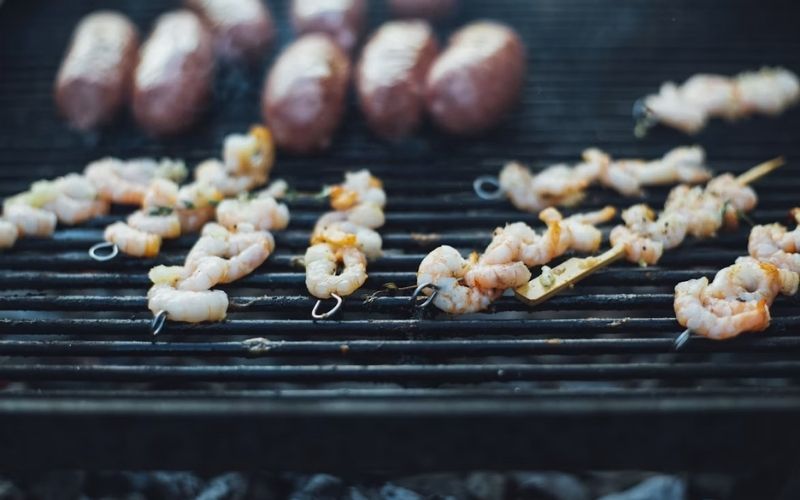
Frozen, Shell-On, and Vegetable Skewers
Even with the right grill temperature and how long to grill shrimp skewers, what goes onto the skewer can change the result. Shells and vegetables affect how heat reaches the shrimp, while starting with frozen seafood makes the usual timing much less reliable.
- Frozen shrimp: Thaw shrimp completely in the refrigerator before grilling. For faster thawing, place them in a sealed bag under cold water, then pat dry before seasoning and grilling.
- Shell-on shrimp: The shell can act as a buffer against direct heat and may slightly change the cooking time. Begin checking for doneness around the normal range rather than automatically adding extra minutes.
- Vegetable skewers: Choose vegetables that cook quickly, cut them into small pieces, or grill the vegetables on separate skewers. Dense vegetables often need more time than shrimp, so cooking them separately can prevent the shrimp from becoming overdone.
These factors explain why the clock should only be your first reference point. Once you get close to the expected cooking time, the shrimp themselves provide better clues.
>>> Read more: How to Grill Shrimp for Perfect Juicy Results: Step-by-Step Guide
4. Perfectly Cooked Shrimp Skewers: What to Look For
Even when you know how long to cook shrimp skewers on the grill, checking doneness is what tells you when they are actually ready. Instead of relying on just one sign, look at the temperature, appearance, and texture together.
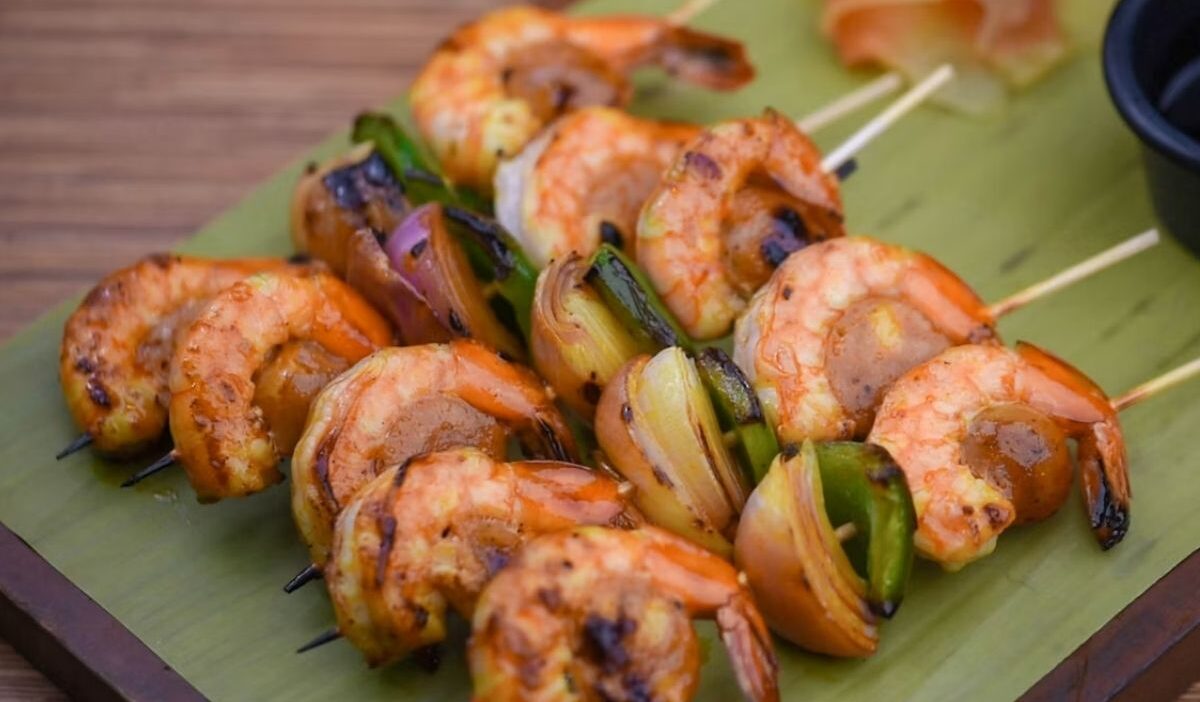
- Color and appearance: Raw shrimp look gray and translucent, while cooked shrimp turn pink on the outside and the flesh becomes white, pearly, and opaque.
- Texture: Properly cooked shrimp should feel firm when handled and should not have a soft, raw center
- Shape: Shrimp naturally curl as they cook, but shape alone is not a reliable doneness test. Use internal temperature, opacity, and texture as the primary indicators instead.
- Internal temperature: For food safety, cook shrimp to an internal temperature of 145°F (63°C). Check the thickest shrimp with an instant-read thermometer when possible. If you do not have one, look for flesh that is firm, pearly, and opaque throughout.
Once those signs appear, take the skewers off the grill rather than giving them “just another minute.” That extra time of how long to grill shrimp skewers is often what turns tender shrimp into dry, chewy ones.
5. Avoid Dry or Rubbery Shrimp
Knowing how long to cook shrimp skewers on grill gets you close, but good texture also depends on what happens before and immediately after that cooking window. A few simple habits can help you keep the moisture in the shrimp instead of cooking it away.
- Do not overcook: Remove shrimp from the grill once they reach the right doneness. Extra time on the heat causes shrimp to lose moisture and develop a firmer, chewier texture.
- Avoid overcrowding: Leave space between shrimp pieces so they cook without extended heat exposure that can affect texture.
- Use shrimp of similar sizes: Similar-sized shrimp help prevent smaller pieces from becoming overcooked while larger pieces finish cooking.
- Limit acidic marinating time: Marinades with acidic ingredients, such as lemon juice or vinegar, can alter shrimp texture if left on too long before grilling.
- Remove skewers promptly: Take shrimp off the grill once they are ready instead of leaving them over heat. This helps maintain moisture and the desired texture.
At this point, how long to grill shrimp skewers, temperature, and technique all work together. If something still goes wrong, the FAQs below address a few common reasons shrimp may cook differently than expected.
>>> Read more: How Long to Grill Lobster Tails for Restaurant-Quality Results
6. FAQs
These answers address common questions about shrimp skewer timing and texture.
Why Do Shrimp Turn Rubbery on the Grill?
Shrimp usually become rubbery when they are overcooked. Because they cook quickly, even an extra minute or two can make the proteins tighten and push out moisture, leaving the shrimp firm and chewy.
Does Shrimp Cooking Time Change on a Charcoal vs. Gas Grill?
Yes, it can vary slightly depending on the heat level of the grill. Use the shrimp’s doneness signs rather than grill type alone to decide when the skewers are ready.
Does Marinating Shrimp Affect Grilling Time?
Usually, no. Most marinades do not require a major timing change, but longer marinating with acidic ingredients can affect shrimp texture.
Conclusion
Grilled shrimp can go from tender to overcooked quickly, so the best results come from watching the shrimp as closely as the clock. Size, heat level, shells, and other ingredients on the skewer can all shift the timing slightly.
As a practical guide, how long to grill shrimp skewers is usually around 5 to 6 minutes over a properly preheated grill, turning once halfway through. Start checking early, look for firm and opaque flesh, and aim for an internal temperature of 145°F so the shrimp stay both safe and enjoyable to eat.