How to grill salmon with skin can seem intimidating if you have ever ended up with fish that sticks to the grates, falls apart when flipped, or turns out dry instead of flaky. A few small adjustments in preparation, heat, and timing can make a big difference without requiring any special equipment.
This guide walks you through each step, from preparing the fillets to checking for doneness, so you can grill skin-on salmon with more confidence and get consistent results every time.
1. Prepare Skin-On Salmon Before It Hits the Grill
How to cook salmon on the grill with skin starts with choosing fillets that have the skin firmly attached and a fairly even thickness.
Similar-sized pieces cook at a more consistent rate, which makes timing easier. If you use frozen salmon, thaw it safely before grilling. Thaw frozen salmon gradually in the refrigerator overnight.
For faster thawing, place the seafood in a sealed plastic bag and submerge it in cold water, or use the microwave defrost setting if you cook it immediately afterward.
Pat the salmon dry with paper towels, especially the skin. Then brush both sides lightly with oil and season with salt and pepper or your preferred dry seasoning.
For a simple seasoning, use:
- Olive or avocado oil
- Kosher salt
- Black pepper
- Optional garlic powder, paprika, or dried herbs
Keep the seasoning simple because the grill and salmon provide most of the flavor. If you marinate the fish, keep it refrigerated until you are ready to cook it.
>>> Read more: How to Start a Charcoal Grill: Guide for Safe, Easy Lighting
2. How to Grill Salmon With Skin
For how to grill salmon with skin, start with clean grates and direct medium to medium-high heat.
- Preheat the grill.
Heat the grill over direct medium to medium-high heat. Clean the grates with a suitable grill-cleaning tool, then lightly oil them using a high-heat cooking oil and a paper towel held securely with long-handled tongs.
Avoid applying so much oil that it drips onto the burners or flames.
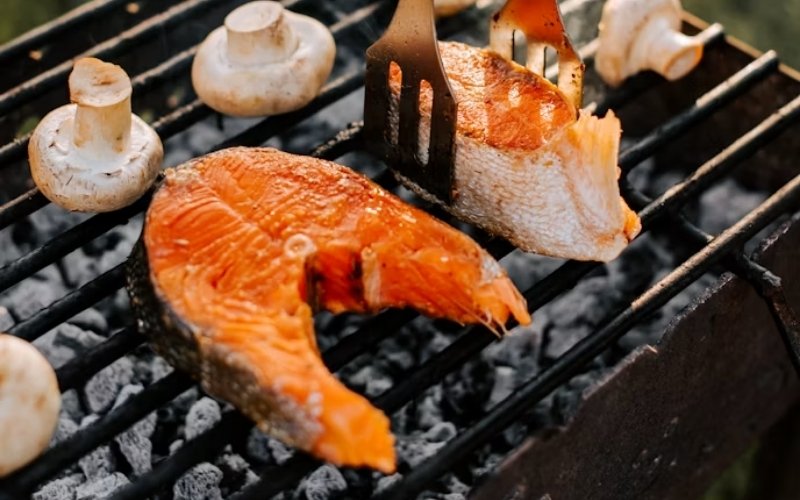
- Place the salmon skin-side down.
Set each fillet directly on the hot grates with the skin against the grill. Keep the pieces spaced apart so you can turn and move them easily.
- Close the lid and leave the fish in place.
For how long to grill salmon with skin, begin checking the fillets after about 5 to 6 minutes. Most fillets need approximately 6 to 8 minutes on the skin side, but thinner pieces or hotter grills may cook faster.
Leaving the salmon undisturbed gives the skin time to firm up and release more easily from the grates.
- Check the release before you flip.
Slide a thin metal spatula gently under the fish. If the salmon releases without the skin pulling away from the grate, turn it carefully. If it still holds firmly, let it cook for another minute before checking again.
Do not rely on release alone to determine whether the salmon is fully cooked.
- Finish on the flesh side.
To finish how to grill salmon with skin, flip the salmon once and cook it for about 1 to 4 minutes more. The exact time depends on the thickness of the fillet, its starting temperature, and the heat of your grill.
Thinner fillets may not need to be flipped if they reach the safe internal temperature while cooking skin-side down.
- Check the center temperature.
Insert a food thermometer into the thickest part of the fish for a safe internal temperature of 145°F.
If you do not have a thermometer, federal food-safety guidance recommends cooking fish until the flesh is no longer translucent and separates easily with a fork. Color and texture can vary by salmon type, so a thermometer provides the more reliable check.
- Transfer and serve.
Once the salmon reaches the recommended temperature, transfer it to a clean plate. You may let it rest briefly before serving, but an extended resting period is not required for food safety.
3. Gas Grill Setup for Skin-On Salmon
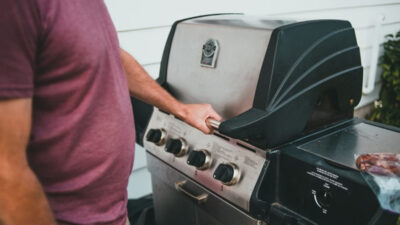
A gas grill lets you control individual burners, making it easier to create hotter and cooler zones across the cooking surface.
This control is useful for how to grill salmon with skin on because fillets with different thicknesses may need different heat levels during the same cook.
For how to grill salmon with skin on gas grill, preheat one cooking zone to medium or medium-high heat and keep an adjacent burner on low or turned off.
Place the salmon skin-side down over the hotter zone. If the skin browns too quickly before the center is ready, move the fillet to the cooler zone and close the lid to finish cooking.
This setup provides more control when grilling several fillets of different sizes. Avoid keeping the salmon over aggressive flames or flare-ups, which can burn the skin before the center cooks.
4. Grilling Time for Skin-On Salmon
Grilling time varies with salmon thickness, starting temperature, grill heat, and whether the lid remains closed. Use estimated times only as a starting point, then check the thickest part for doneness.
How to Tell When Grilled Salmon Is Done
These times are estimates for a preheated grill and may vary considerably.
Use the timing guidance in how to grill salmon with skin to decide when to start checking the fish rather than treating it as a guaranteed cooking schedule.
| Salmon Thickness | Approximate Total Grill Time |
| About ¾ to 1 inch | 7 to 12 minutes |
| About 1½ inches | 10 to 15 minutes |
| Thicker fillets | Begin checking by temperature and continue cooking as needed |
For the most reliable result, insert a food thermometer into the thickest part of the salmon. Fish is safely cooked when it reaches 145°F.
When a thermometer is unavailable, check whether the flesh is no longer translucent and separates easily with a fork. These visual signs are an alternative doneness check, not additional steps that must occur after the fish has already reached 145°F.
The thickest part is the best place to check because thin edges usually cook first. Remove each fillet individually when it reaches the recommended temperature rather than waiting for every piece to finish at the same time.
Common Mistakes When Grilling Salmon With Skin
A few simple adjustments can improve how to grill salmon with skin:
- Skin browns before the center cooks: Move the fillet to the cooler zone on a gas grill.
- Skin sticks when you try to turn it: Give it more time before testing the release.
- Salmon cooks unevenly: Check each fillet separately when pieces have different thicknesses, since how to grill salmon with skin depends partly on the size of each piece.
- Fish reaches temperature too quickly: Use the cooler grill zone to slow the surface browning.
- Skin is not crisp enough: Keep direct contact with the hot grate for the initial cook rather than using foil.
- Skin burns before releasing: Reduce the heat. Medium-high heat is not appropriate for every grill or fillet thickness.
>>> Read more: How to Grill Shrimp for Perfect Juicy Results: Step-by-Step Guide
5. FAQs About Grilling Salmon With Skin
These answers cover a few practical choices that can change the grilling method without repeating the main steps.
How do you grill salmon on a gas grill?
Preheat one section of the grill to medium or medium-high and leave an adjacent section at low heat or turned off. Cook the salmon skin-side down over direct heat, then move it to the cooler zone if the skin browns before the center reaches 145°F.
Should you grill salmon in foil?
Foil works when you want easier handling, less sticking, and less direct contact between the fish and the grates. For crisp skin, direct grilling is generally the better choice because the skin touches the hot grates.
Do you need to flip salmon when grilling?
Not always. A thinner fillet can cook completely while remaining skin-side down. A thicker piece may benefit from a short finish on the flesh side, but check its internal temperature before deciding to flip it.
What oil is best for grilling salmon with skin?
Avocado or canola oil are practical choices because they tolerate relatively high cooking temperatures. Refined olive oil may also work at moderate grilling temperatures. Use only enough to coat the salmon and grates lightly.
How do you keep salmon skin from sticking to the grill?
Start with clean, fully preheated grates, pat the skin dry, and apply a light coating of oil. Let the skin cook until it begins to release naturally before trying to turn the fish. If it still grips the grate, wait another minute rather than forcing the spatula underneath.
Conclusion
Great grilled salmon is not just about following a timer. The condition of the grill, the thickness of the fillet, and knowing when the fish is ready all play a part in the final result. That is why learning how to grill salmon with skin is as much about paying attention to the fish as it is about following a recipe.
With a clean grill, steady heat, and a thermometer to confirm doneness, skin-on salmon becomes one of the most reliable meals to cook outdoors. Once you find the approach that works best for your grill, it is a technique you can return to throughout grilling season.