How to use a charcoal grill is one of the first skills every outdoor cook should learn before preparing flavorful barbecue.
A charcoal grill gives steaks, burgers, vegetables, and other foods a smoky taste that many people prefer over gas grilling. However, every successful cook starts with the right setup, proper heat control, and safe grilling habits.
Learning how to use a charcoal grill does not have to feel complicated. Once you understand how charcoal burns, how airflow affects temperature, and how different cooking zones work, every cookout becomes much easier.
1. What You Need Before You Start
Every great barbecue begins with proper preparation. The right equipment helps every cook manage heat safely while producing consistent results.
Before lighting your grill, gather these essentials:
- Charcoal briquettes or lump charcoal
- Chimney starter
- Natural fire starters or newspaper
- Long-handled grilling tongs
- Heat-resistant gloves
- Grill brush
- Instant-read meat thermometer
- Aluminum drip pan
- Cooking oil and paper towel
A chimney starter offers one of the safest and most reliable ways to light charcoal. The chimney allows air to circulate through the coals, so every piece lights evenly without lighter fluid. As a result, your food develops a cleaner charcoal flavor.
Anyone learning how to use a charcoal grill for the first time should also choose a safe grilling location. Place the grill on a stable, noncombustible surface that sits well away from your home, deck railings, fences, and low-hanging tree branches.
According to the National Fire Protection Association (NFPA), July accounts for about 15% of annual grill fires, followed closely by June and May.
The organization also reports that nearly one-quarter of home grill structure fires begin on an exterior balcony or open porch.
Keeping children and pets at least three feet away from the grilling area also reduces the risk of accidents.
2. Light a Charcoal Grill and Set Up Heat Zones
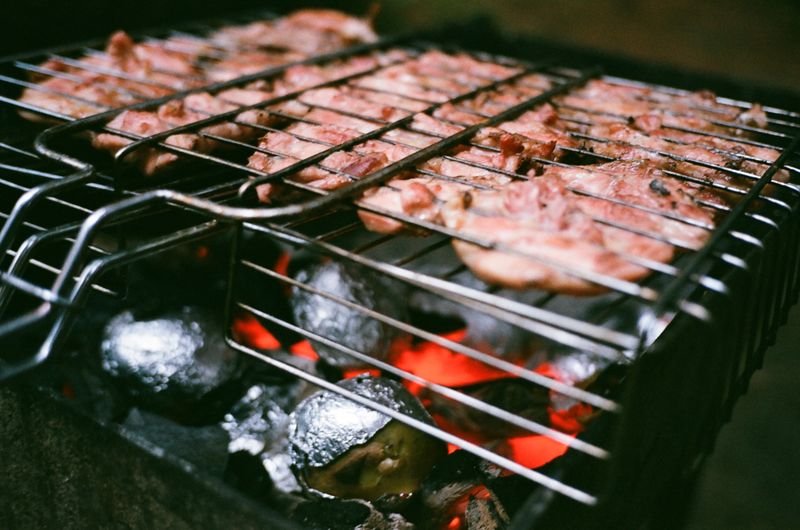
The next step in learning how to use a charcoal grill involves lighting the charcoal correctly. Properly lit charcoal creates stable heat and helps food cook evenly.
Follow these simple steps:
- Fill a chimney starter with charcoal.
- Place crumpled newspaper or a natural fire starter underneath.
- Light the paper through the bottom vents.
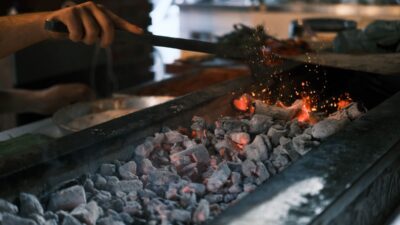
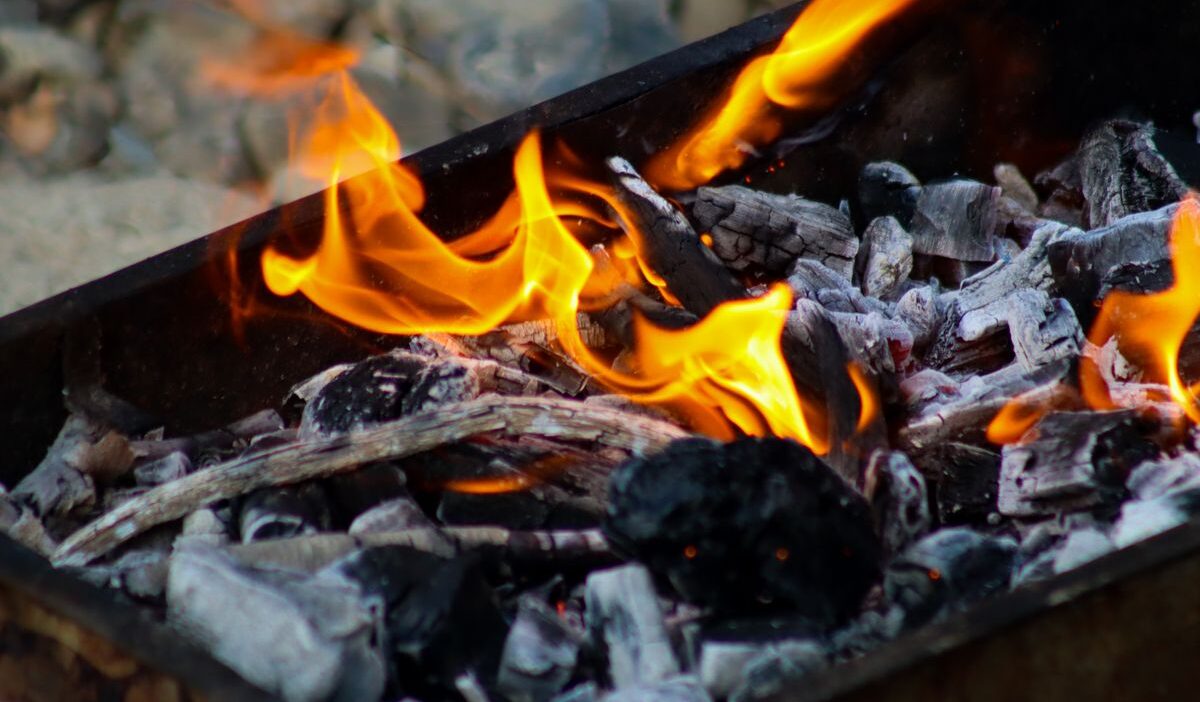
- Wait about 15 to 20 minutes until most coals become covered with gray ash.
- Carefully pour the hot charcoal into the grill.
- Arrange the charcoal into two heat zones.
A two-zone fire creates one side for direct heat and another side for indirect heat. The direct side provides high temperatures for searing steaks, burgers, or vegetables. The indirect side cooks thicker foods more gently without burning the outside.
This setup gives every cook greater flexibility. For example, you can sear a steak over direct heat before moving it to indirect heat until it reaches the desired internal temperature.
If you choose lighter fluid instead of a chimney starter, only use charcoal starter fluid according to the manufacturer’s directions. Never add lighter fluid, gasoline, alcohol, or any other flammable liquid to burning or hot charcoal.
3. Control Heat While Cooking
Understanding airflow forms another important part of how to use a charcoal grill. Instead of constantly adding charcoal, every cook should first adjust the grill vents.
The bottom vent controls much of the oxygen feeding the charcoal, while the top vent helps exhaust heat and smoke.
On many kettle grills, cooks often keep the top vent open or mostly open and make smaller temperature changes with the bottom vent, but exact control depends on the grill.
Vent settings are not exact temperature controls, but they are useful for guiding the fire. Weather, charcoal amount, grill size, and lid position all affect the final temperature.
| Vent Setting | General Effect | Best For |
| Mostly open | More oxygen, hotter fire | Searing, burgers, steaks, vegetables |
| Partly open | Moderate airflow | Chicken pieces, pork chops, seafood |
| Mostly closed | Less oxygen, cooler fire, but risk of smothering | Slower cooking only when carefully monitored |
Keep the lid closed during most of the cook. The closed lid traps heat, circulates smoke, and cooks food more evenly. Every unnecessary lid opening releases heat and increases cooking time.
Use a separate instant-read food thermometer to check meat doneness, because grill temperature and food temperature are not the same.
Finally, never leave a charcoal grill unattended while it is in use. Even a well-managed fire can change quickly if grease ignites or wind increases airflow.
4. Cooking on Different Charcoal Grills
Although the basic principles remain the same, different grill sizes require slightly different techniques.
How to Use a Small Charcoal Grill
Many beginners wonder how to use a small charcoal grill effectively because compact grills heat up quickly.
Small charcoal grills work best when you:
- Use fewer charcoal pieces.
- Arrange food in a single layer.
- Watch food more closely and move it away from flare-ups when needed.
- Keep the lid closed whenever possible.
Because compact grills hold less fuel, temperature changes happen more quickly. Small adjustments usually produce better results than major changes.
How to Use a Weber Charcoal Grill
Many backyard cooks also ask how to use a Weber charcoal grill because Weber kettle grills remain among the most popular charcoal grills available.
The cooking process resembles other charcoal grills, but Weber grills offer excellent airflow control through adjustable top and bottom vents. The rounded lid also circulates heat efficiently for more even cooking.
For consistent results:
- Fully open the bottom vent before lighting.
- Build a two-zone fire.
- Keep the top vent open or mostly open for steady exhaust, then adjust vents gradually as needed.
- Empty the ash catcher after every grilling session.
These simple habits help Weber grills maintain steady temperatures throughout longer cooks.
>>> Also read: How to Season a Blackstone Grill for the First Time
5. Adding Wood Chips for Smoke Flavor
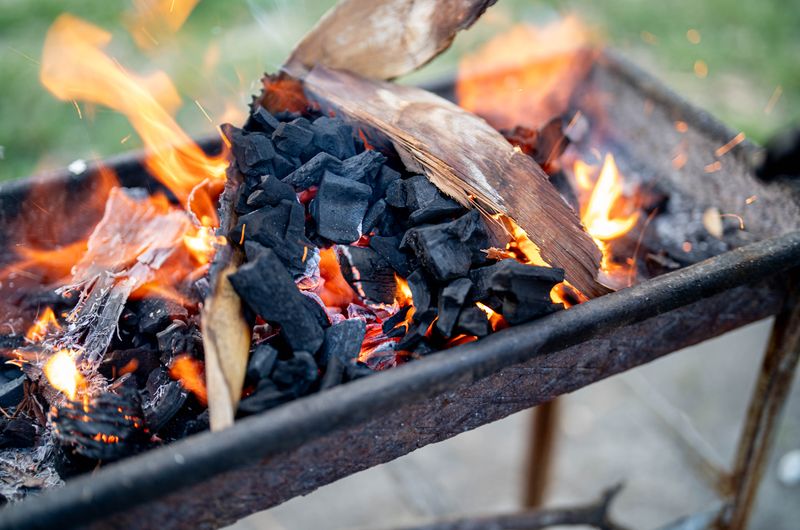
After learning how to use a charcoal grill, many cooks begin experimenting with smoky flavors.
Wood chips release aromatic smoke that complements different meats and vegetables.
| Wood Type | Best With |
| Hickory | Beef and pork |
| Apple | Chicken and pork |
| Cherry | Poultry |
| Oak | Beef, pork, vegetables |
| Mesquite | Beef |
Many beginners ask how to use wood chips on a charcoal grill without creating excessive smoke.
The easiest method includes these simple steps:
- Wait until the charcoal becomes fully lit.
- Scatter a small handful of dry wood chips directly over the hot coals.
- Close the lid immediately.
- Add another small handful only if needed during longer cooks.
Many experienced pitmasters prefer dry wood chips because dry wood begins smoking more quickly than soaked wood. Regardless of your method, avoid using excessive amounts because too much smoke can overpower food and create bitter flavors.
6. Common Mistakes to Avoid
Even experienced grillers occasionally make mistakes. Fortunately, every beginner can avoid the most common problems.
Starting before the charcoal is ready
Every cook should wait until the charcoal develops a light gray coating. Fully ignited charcoal produces cleaner heat and more consistent cooking temperatures.
Skipping grill cleaning
Clean grates improve both flavor and safety. According to NFPA research, roughly 20% of grill fires occur because grills have not been cleaned properly. Every cook should remove grease from the cooking grate and grease tray after each grilling session.
Using only one cooking zone
A single pile of charcoal limits your cooking options. Two heat zones give you much greater control over different foods and reduce the chance of burning delicate ingredients.
Constantly opening the lid
Every lid opening releases valuable heat. Instead, check food only when turning or testing doneness.
Throwing away charcoal too early
Charcoal stays hot much longer than many people expect. After cooking, close the vents to help extinguish the fire, let the coals and ashes cool completely, then dispose of them in a metal container, never in household trash while warm.
7. FAQs
Should the lid stay open or closed when grilling?
The lid should stay closed for most indirect cooking and many thicker foods because it traps heat and smoke. For quick direct grilling, such as thin burgers or vegetables, you may open the lid briefly to flip, move, or check food.
Can you add more charcoal while cooking?
Yes. You can add charcoal during longer cooks. Use long-handled tongs or heat-resistant gloves, add a small amount at a time, and give the new charcoal several minutes to ignite before placing food directly over it.
Why does food taste bitter on a charcoal grill?
Food usually tastes bitter when charcoal burns incompletely or produces thick white smoke. Excess lighter fluid, dirty grill grates, and too many wood chips can also create unpleasant flavors.
Can you reuse leftover charcoal?
Yes. Close both grill vents after cooking to extinguish the remaining charcoal. Once the charcoal cools completely, you can reuse partially burned pieces by mixing them with fresh charcoal during your next cook. Never dispose of warm charcoal in household trash because hidden embers can remain hot for several hours.
8. Conclusion
How to use a charcoal grill becomes much easier once you understand fire management, airflow, and proper cooking techniques. Every successful cook starts with quality charcoal, builds separate heat zones, controls temperature with the vents, and keeps the grill clean after every meal.
Whether you are learning how to use a charcoal grill for the first time, mastering how to use a Weber charcoal grill, experimenting with how to use wood chips on a charcoal grill, or discovering how to use a small charcoal grill, the same principles produce reliable results.
Safe preparation, steady heat control, and regular maintenance help every cook enjoy better barbecue while reducing unnecessary risks.