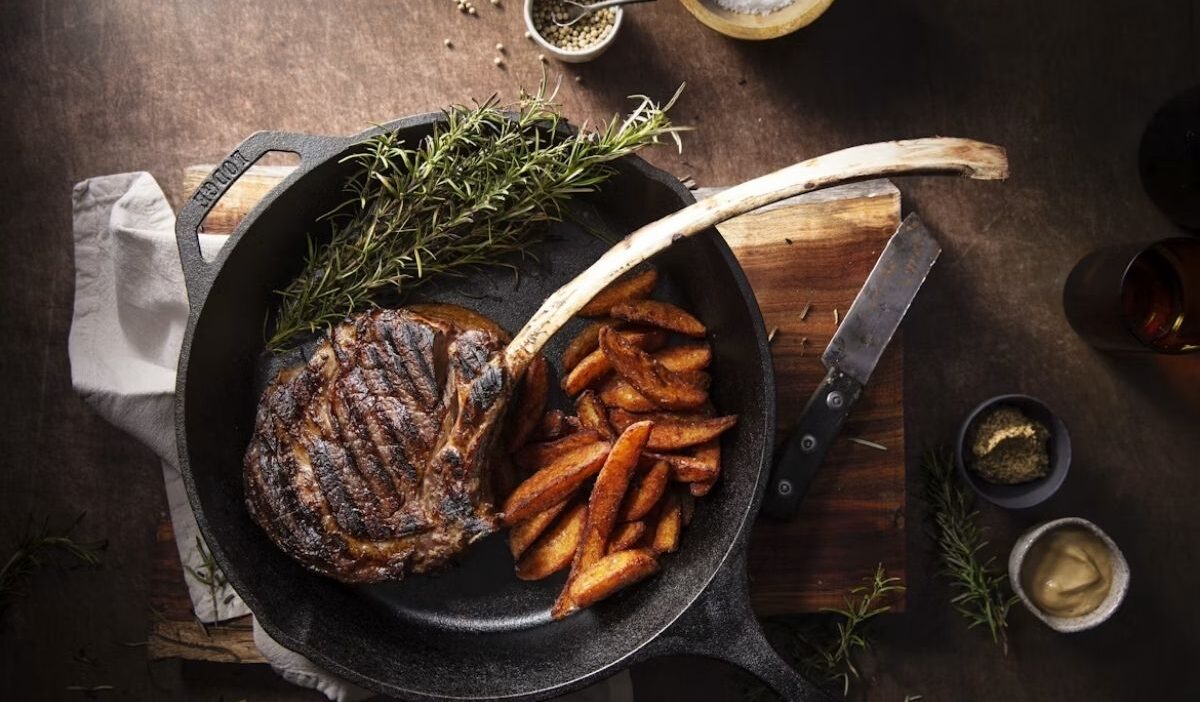
How to grill a tomahawk steak comes down to controlling heat carefully. Because this cut is much thicker than a standard steak, high heat alone can leave you with a dark crust while the center is still undercooked. A reverse sear solves that problem by cooking the steak gently first, then finishing it over high heat for a flavorful crust.
The key is knowing when to move between those two stages. Follow the steps below to set up your grill, monitor the internal temperature, and get the tomahawk ready for that final sear.
1. Prepare the Steak and Set Up Your Grill
A few preparation steps show how to cook a tomahawk steak on the grill with two heat zones. Take the steak from the refrigerator before cooking, then pat the surface dry with paper towels.
Season all sides with coarse salt and black pepper, or use a beef rub that suits your preference. If you want to keep the exposed bone from darkening too much during the final sear, you can loosely wrap the tip with aluminum foil.
Set up a two-zone grill with a cooler indirect side and a hotter direct side. Leave one burner area off while the other side provides direct heat for how to cook a tomahawk steak on a gas grill. And arrange the coals on one side of the grate for a charcoal grill.
2. How to Grill a Tomahawk Steak
A thick tomahawk steak works well with the reverse sear because how to grill a tomahawk steak depends on controlling the cooking and browning stages.
Cook the steak over indirect heat
Preheat the indirect side to 225°F to 250°F. Place the tomahawk on the cooler side with the lid closed and cook gradually until the internal temperature is about 10°F below your intended final temperature. Check the thickest part with an instant-read thermometer without touching the bone, since thickness and grill conditions can change the cooking time.
This approach gives you better control over how long to cook a tomahawk steak on the grill without exposing the exterior to high direct heat too early.
Finish with a high-heat sear
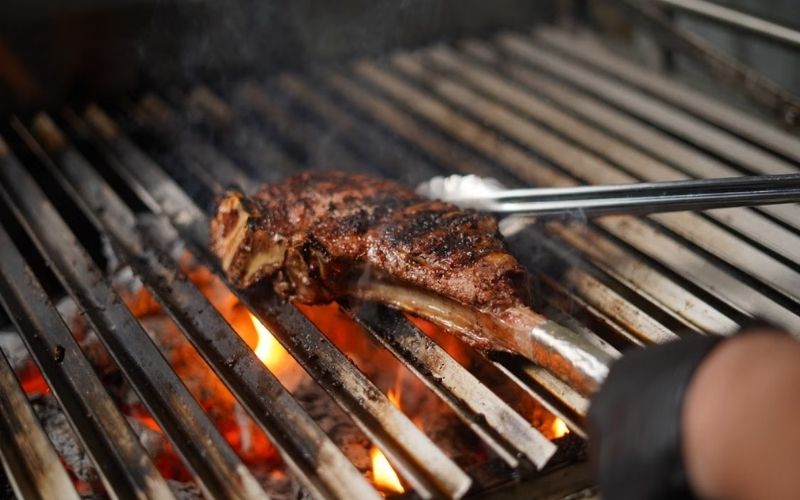
Raise the direct heat to 450°F or higher, then place the steak over the hottest part of the grill to complete how to grill a tomahawk steak with a properly browned crust.
Sear briefly on each side, checking and turning as needed until the exterior develops a deeply browned crust and the steak reaches the intended internal temperature. Depending on the grill’s heat, this may take around 1 to 2 minutes per side.
Rest and slice
Transfer the steak to a clean cutting board and loosely tent it with foil. Let it rest for about 10 minutes before slicing.
Cut the meat away from the long bone first. Then identify the direction of the muscle fibers and slice across the grain into thick pieces.
3. Temperature, Timing, and Doneness
The success of how to grill a tomahawk steak depends on matching the internal temperature, thickness, and desired level of doneness.
Internal temperature
Culinary doneness guides commonly place medium-rare steak below the USDA food-safety recommendation.
For food safety, USDA recommends cooking whole beef steaks to an internal temperature of 145°F, measured in the thickest part, followed by at least a 3-minute rest.
If you choose a lower doneness temperature based on personal preference, be aware that it falls below that federal recommendation.
The thermometer should go into the thickest part of the steak without touching the bone, fat, or gristle.
Cooking time by thickness
Cooking time determines how long to grill a tomahawk steak, but there is no reliable fixed time for every tomahawk cut.
Use thickness-based estimates only as a starting point, then adjust the cooking period according to the steak’s actual internal temperature.
Doneness signs
Look for these visual and texture cues at different levels of doneness:
- Medium-rare: Browned exterior, red-pink center, and a tender, springy texture.
- Medium: Browned exterior, a warmer pink center, and a firmer texture.
- Well-done: Little to no visible pink and a noticeably firm texture.
Visual and texture cues can support the assessment, but they should not replace an internal temperature check.
4. Common Mistakes When Grilling a Tomahawk Steak
These mistakes can affect temperature control or the final texture without changing the basic grilling method.
| Mistake | What to Solve |
| Checking temperature too close to the bone | Insert the thermometer into the thickest part of the meat. |
| Using thickness and weight interchangeably | Base cooking estimates on thickness rather than weight. |
| Cutting the steak immediately after grilling | Let the steak rest before slicing to improve serving texture. |
>>> Read more: How to Grill Ribeye Steak Perfectly Every Time
5. FAQs About Grilling Tomahawk Steak
These answers address common choices related to how to grill a tomahawk steak that are not covered directly by the main grilling steps.
Can you grill a tomahawk steak without reverse searing?
Yes. Reverse searing is not required, but a thick tomahawk still benefits from a two-zone grill. You can sear it over direct heat first, then move it to indirect heat to finish cooking the center more gradually.
Do you need to flip a tomahawk steak more than once?
No. You do not need to flip a tomahawk steak repeatedly, although turning it during the searing stage can help the surface brown more evenly.
Should you grill a tomahawk steak with the lid open or closed?
Keep the lid closed during the indirect cooking stage. This helps the grill maintain a steady cooking environment around the thick steak, while the lid can be opened during searing when you need to monitor and turn the steak.
Can you grill a frozen tomahawk steak?
Yes, but thawing it first is the better approach for this thick cut. A fully thawed steak allows the center and exterior to cook more predictably, which makes it easier to control the final doneness.
Why didn’t my tomahawk steak develop a good crust?
The searing surface may not have received enough intense heat or enough direct contact with the grill. A properly heated cooking surface and sufficient searing time are essential for strong surface browning.
Conclusion
Learning how to grill a tomahawk steak is less about following an exact cooking time and more about managing temperature. Start with indirect heat to cook the thick center gradually, then finish over high heat to develop a browned crust. Most importantly, use a meat thermometer rather than relying on appearance or timing alone.
Once you have the two-zone method down, this impressive cut becomes much easier to manage. Explore more grilling guides and Texas-style recipes from HanksTexasGrill for your next cookout.